Today I presented my concept for the play Waiting For Godot.
Here was my presentation:
Today I presented my concept for the play Waiting For Godot.
Here was my presentation:
In this rehearsal, we split up into two groups of two and a group of three. In each group, we had one director and the actor had to perform Lucky's monologue from Waiting For Godot by Samuel Beckett. The three groups were, Hugo (director) & Tristan (actor), James (actor) & Louis (director), Amelie (director), Silvana (actor) & Emma (actor).
HUGO & TRISTAN
Hugo and Tristan placed their scene in a bar or pub. Tristan played Lucky as a very intelligent but drunk man, telling Hugo all of the knowledge in his head. In this performance, we interpreted it as if Godot was a drink or a bartender who they were waiting for. This made it very contemporary and the themes of alcoholism and existentialism link, as a lot of people believe they find answers and happiness and the bottom of a bottle.
JAMES & LOUIS
Louis directed James to play Lucky as an old professor. This was very effective and the audience interpreted it as if he was giving a lecture. Even the stuttering that is in Lucky's monologue was done so effortlessly in the way a lecturer would do it. Half way through the play, Louis put on some church music with organs. This immediately made James look like he's a preacher. It brought the theme of religion in, which is very relevant as well as being a considerable amount of peoples interpretation of Waiting for Godot, with Godot being God.
AMELIE, SILVANA & EMMA
Amelie directed Silvana and I. Before we started, she showed us this video: (1h55)
After we watched that, she explained that she wanted us to be like two different parts of Lucky's brain. A more intelligent side and a crazier, more obnoxious side. In order to do this, we split up the lines to ones that were more intelligent and ones that were waffle. I took the crazy side and Silvana took the intelligent side. We had a hairband on our wrist which attached Silvana and I together. Amelie directed us so we looked as if we had purpose to what we were saying even though it didn't originally make sense.
ESTRAGON - CHARACTER ANALYSIS
Estragon and Vladimir talk about being together for about 60 years. It doesn't state how old these two characters are but I would assume they're possibly 70.
PERSONALITY
Estragon represents the impulsive, yet simplistic side of the two main characters. It contrasts Vladimir's careful intellectualism and verbosity. He doesn't care about appearances and is mainly concerned with eating and sleeping. He has a pessimistic outlook on life and therefore has abandoned all hope of any alleviation of their suffering. He thinks that Godot is suspicious. Out of Estragon and Vladimir, Estragon suffers the most physically. He has difficulties with his boots, he gets kicked by Lucky, he falls a numerous amount of times and he is beaten by thugs every night. His boots don't fit and cause him pain in the first act so by the end of the first act, he leaves them on the side of the road. In the second act, he finds them in the same place, but now they mysteriously fit him. Estragon has a misanthropic view of humanity. He considers people to be "ignorant apes" and seems to want them to leave him alone, despite being very attached to Vladimir. He wants and needs protection and Vladimir provides it, even if that comes with the occasional bickering. Estragon is often seen as the child to Vladimir's adult, and looks for parental security in him.
APPEARANCE
Estragon doesn't get a lot of description in the play. The only thing we get, is that he is described as wearing "rags", walking with a limp (which eventually wears off) and being lighter than Vladimir. As he does have a rather gluttonous nature, he is often played as being short and fat, in contrast with tall and lanky Vladimir. His clothes are dirtier than Vladimir's and seems to be in worse condition, due to his lack of inhibitions, like diving for food and sleeping in ditches.
Today, we got into 3 groups, Amelie & Silvana, Tristan, Hugo & Louis, and James & I. We each took turns to direct a piece of theatre from the Waiting for Godot script, using the practitioners we wanted.
AMELIE & SILVANA
Amelie & Silvana decided to direct the hat scene, using Frantic Assembly as their practitioner. They picked Tristan and I to be the actors. Tristan was Vladimir and I was Estragon. They used round, by, through as their movements for the changing of hats.
TRISTAN, HUGO & LOUIS
Tristan, Hugo and Louis decided to direct the scene where the boy comes to talk to Vladimir, using Berkoff as their practitioner. They cast James as the Boy and Amelie as Vladimir. They used exaggerated and literal movements according to the lines.
JAMES & EMMA
James and I decided the direct the scene where Pozzo & Lucky first join the play, using Dario Fo as our practitioner. We cast Tristan as Lucky, Louis as Pozzo, Hugo as Vladimir and Silvana as Estragon. We tried to make the timing and the movements that Lucky did comedic.
Today, two groups, Tristan and Hugo and Silvana and James, performed their interpretation of the first few pages of Waiting for Godot by Samuel Beckett. Each group contextualised the play and made it relevant for contemporary youth.
Tristan and Hugo
Tristan and Hugo experimented with accents and stuck to the Russian accent at the end. This portrayed a sense of comradeship and I interpreted it as two brothers in the army together. There were specific lines that stuck out which anchored this, such as, "crawling around in the mud". This is relevant to today as there are wars going on in the world.
Silvana and James
Silvana and James were initially looking at doing the play in the style of Steven Berkoff but eventually went to the style of Stanislavski but they kept the East London accent which they were using with Berkoff. This made the piece appear to be set in the cobbled streets of London outside a bar or pub. I interpreted that Godot was the bar owner who they were waiting for. This also lead to the idea of poverty and homelessness which is more relevant than ever right now due to the high unemployment rate from the global pandemic.
EXISTENTIALISM
Existentialism is a philosophical theory or approach which emphasises the existence of the individual person as a free and responsible agent determining their own development through acts of the will. It is the theory behind the unconscious movement Theatre of the Absurd, which is perhaps more of a genre than a style. Significant practitioners were not traditional theoreticians and directors, but instead were major playwrights. The movement leapt onto the world stage in the form of unconventional plays, primarily by European (and later American) playwrights. Absurdist theatre directly influenced much of European drama for more than ten years and within it lie some of the best plays of the 20th Century.
ALBERT CAMUS

Born: November 7, 1913
Died: January 4, 1960
Albert Camus was a French novelist, essayist, and playwright, best known for such novels as L'Étranger (1942), La Peste (1947) and La Chute (1956) and for his work in leftist causes. He received the 1957 Nobel Prize for Literature. Camus focused most of his philosophy around existential questions. The absurdity of life, the inevitable ending is highlighted in his acts. His belief was that the absurd - life being void of meaning, or man's inability to know that meaning if it were to exist - was something that man should embrace. His anti-Christianity, his commitment to individual moral freedom and responsibility are only a few of the similarities with other existential writers. More importantly, Camus addressed one of the fundamental questions of existentialism: the problem of suicide. He wrote: "There is only one really serious philosophical question, and that is suicide." Camus viewed the question of suicide as arising naturally as the solution to the absurdity of life.
JEAN-PAUL SARTRE
Born: June 21, 1905
Died: April 15, 1980
Jean-Paul Charles Aymard Sartre was a French philosopher, playwright, novelist, screenwriter, political activist, biographer, and literary critic. He was one of the key figures in the philosophy of existentialism and phenomenology, and one of the leading figures in 20th-century French philosophy and Marxism. Some of Jean-Paul Sartre's plays include No Exit (1944), The Flies (1943), Prljave ruke (1948), The Respectful Prostitute (1946), The Devil and the Good Lord (1951), The Condemned of Altona (1959) and The Chips are Down (1947).
Bibliography
Existentialism and Theatre of the Absurd
SAMUEL BECKETT
THEATRE OF THE ABSURD
The Theatre of the Absurd movement consisted of different post-World War II plays which agreed with philosopher Camus's statement, that the human situation is essentially absurd and devoid of purpose. Characterised by a fascination with absurdity in all its forms - philosophical, dramaturgical, existential, emotional - this is a drama form that pushes theatre to extremes, and which asks probing questions about what reality (and unreality) really looks like. In Beckett's Waiting for Godot, plot is eliminated, and a timeless, circular quality emerges as two lost creatures, usually played as tramps, spend their days waiting without any certainty of whom they are waiting for or if he, or it, will ever come.
WAITING FOR GODOT
Waiting for Godot's first performance was January 5, 1953. Beckett wrote Waiting for Godot just after the end of the German occupation of France and during those years, Beckett and Suzanne, his future wife, were members of the French Resistance. The French Resistance was an underground movemebt that rebelled against Nazi forces by passing secret information about the Nazis. This information was passed using codes which were similar to the brief poetic language that the characters use in the play. Beckett and Suzanne were forced to escape by fleeing to the French hamlet of Roussillon where they picked grapes such like the characters in Waiting for Godot, Vladimir and Estragon. The blend of the coded speech and the waiting for, (Nazis to find them or the Allies to free them) has been linked to Godot of Beckett's own experience. Some imagine that "Godot is a play about the Resistance; characters have code names, get beaten by the Gestapo, and carry on their assignments." Waiting for Godot has links in the social context as waiting was the hardest part during the Cold War should the idea of a nuclear threat become real. The relationship between the two characters could also link to the relationships within the French as in waiting for the expected showdown between the two superpowers.
Beckett refused to elaborate on the characters beyond what he had written in the play. He didn't have a visual image of Vladimir and Estragon when he wrote the play. They are never referred to as 'tramps' in the text but they are often depicted as such on stage. Normand Berlin wrote, "Because the play is so stripped down, so elemental, it invites all kinds of social and political and religious interpretations.".
ORIGINAL STAGING CONDITIONS
The first performance was in Paris, France, at the Theatre de Babylone on the 5th January 1953, and was performed in French. The performance didn't receive any good reviews and the audience became quite rowdy. The theatre only had 75 seats and the budget was very small so there was a fair bit of creativity. For example, the director stepped in for Pozzo's character as the original actor dropped out, and had to strap pillows to him to get a more fitting physical appearance. Another example was that the briefcase was found in the bin.
The original cast was:
GREEK THEATRE
Silvana and I went through our piece again and decided to re-record. We have been trying so hard to get it done without stopping so we are trying it again. We had to do it quite a few times and then realised that in our last video we missed a few lines so we made sure we knew what we were doing before recording. We managed to get it done in the best way we've done it yet so I'm very happy.
...
...
Today, Silvana and I attempted to re-record our East piece. We were so much more effective with our lines and movements this time than last time. Our filming went really well besides the fact that we had to film in the bathroom as we couldn't find any other room that was free to film in. Someone walked in mid-performance which was very frustrating so we might attempt to re-record it again.
Today we looked back at our piece we attempted to finish over the weekend. It looked way too choppy and we were not happy with how it turned out so we will be filming it again. In the afternoon, we re-filmed 4.48 Psychosis as we thought the vibe wasn't correct in the last one. To help change that, we filmed in the auditorium with louder music and different, eerie lighting. This one went so much better for us and then we recorded our post-performance discussion.
Today, Silvana, Louis and Tristan came over to mine to finish our East performance. Our aim for today was to completely finish learning our lines and movements for each line and then get it filmed. Silvana was already very familiar with her lines whereas I wasn't as much. She helped me learn all my lines and then together we created movements for specific lines and words. After that, we went downstairs to film. It didn't go massively to plan as we didn't manage to swiftly go through without any awkward silences or without forgetting our lines. We thought we would be able to just edit these pauses out but it didn't turn out the way we wanted to.
We began today's rehearsal with a quick reminder of our lines. This went a lot better than yesterday but each of us have a few lines that we continuously get stuck on. After that, we looked at the different music choices for the different parts of the piece. We then went to a bigger space to do some more physical aspects. Silvana mentioned that she wasn't too certain on a part of her chair duet with Tristan as she was planning on crossing one leg over the other but the bed is quite low so it's difficult and doesn't look very smooth. We managed to figure out a different routine for that specific part of the chair duet and it looked a lot better. After that, we discussed the issue with our Swindon 5. We were previously walking over the bed and then stopping in the middle of the bed and saying our lines. This was an issue as it slowed down our piece a lot and the bed is quite creaky and distracting. We tried a few different ways but ended up coming to the conclusion that we would scrap the Swindon 5 and instead stand in 4 spots and create levels as we stand up when we say our line. I think it looks a lot more put together and clean now. Then we wanted to do an exaggerated run through, but Tristan wasn't in the mood and so it didn't really go to plan. We also managed to completely forget all of our lines which was a disaster. For the last two minutes we added a more concluded ending to the piece and decided that we were going to have our last run through at lunch time tomorrow.
We had a small discussion period at the start of todays rehearsals on our goals for today and our goals for the week. We then went to the common room to repeat what we did on Friday's rehearsal with the chair duets. We've managed to fully secure what we wanted to do with this section of the piece. For the start of our rehearsals after lunch, we went through our lines and learnt the order of them. As 4.48 Psychosis is very abstract, the lines are quite difficult to learn and the order is even more difficult to remember. We has to go through these for quite a long time to get everything engraved in our heads. After we learnt the order of the lines, we continued with finishing the rest of the piece. We then blocked where we would say our lines and the emotion each of us would say it in. I am happy, Louis is angry, Silvana is sad and Tristan is emotionless. We really looked into pacing and volume today, especially with the numbers section.
We were meant to have a rehearsal yesterday but Tristan wasn't feeling well so we changed it to today. We wanted to focus on East today as our aim was to get it filmed and done with. As we had planned to rehearse the day before but weren't able to, we didn't have as much time to rehearse today and didn't manage to fit what we wanted to get in and reach our target. We have rescheduled the filming to next weekend and we will be a lot more prepared by then.
In today's rehearsal we decided that we should try figure out what we would be doing for our chair duet. We struggled to figure out what to do as a four so we split up into two pairs. I went with Louis and Silvana and Tristan went together. Then we initially attempted to improvise some movements with some music. We started off by seeing how it would work when Louis does one move and then I do one move. We managed to create a small piece of theatre but we thought that it wasn't good enough, so we took inspiration from another chair duet piece that we created at the start of last year. This helped us massively and we managed to get it all done. Then we switched the pairs so I went with Silvana and Tristan and Louis went together. We went through the same process again and ended up with 4 different chair duets. Then we decided to figure out how we would link all of these pieces together and it went really well.
During our rehearsal in the small room today, we decided to really focus on learning our lines. We collectively decided to focus on the lines for East as we struggle more with them rather than 4.48 Psychosis.
After school, we stayed to do another rehearsal where our aim was to completely block 4.48 Psychosis. I think we were being a bit optimistic with this goal, but we still managed to get a fair bit done. We now know what we're doing after the first part of physical theatre. We also decided that after the line "don't let me forget", we would have a chair duet style of movements whilst sitting on the bed, but we didn't particularly want to focus on doing physical theatre today as we needed to block everything else. We included in a Swindon 5, which I think could look really good if we polish it up a bit. This is footage of a little run through we did in our rehearsal.
...
...
Today we want to focus on 4.48 Psychosis by Sarah Kane. This is because we have figured out what we want to do for our other piece and we think it's a lot easier to finish so we want to get this one sorted out. First we're going to figure out the blocking for our lines as we already know the opening physical theatre. We struggled to decide which pieces of texts we wanted to use, but we figured out more of the lines and the order we wanted to do them in. Because we were in the small space, we weren't able to get on our feet to figure it out. We also figured out our aim for today was to complete our blocking entirely for this piece so we just have to polish it up afterwards.
Unfortunately, we were all exhausted and hit a wall today so we weren't able to hit the goal. It's quite frustrating but it will push us to work harder next rehearsal.
In today's rehearsal, Louis and Tristan and Silvana and I split off into separate groups and started to look through our second script, East by Steven Berkoff. Silvana and I started off this rehearsal by watching two different videos of people performing East.
We looked at this video to get a better idea of the way East is performed using Berkoff's style:
During this rehearsal, we didn't have a lot of space to work with, so we decided that it would be a good time to discuss our second piece. We all decided that we weren't happy with the piece Noises Off by Michael Frayn, so we spent some time looking and exploring other scripts. We researched some scripts online, which were quite good, but either too short or had one main character and the other characters were much smaller. Then we went the route of looking at texts we have already looked at or studied. We looked at Gagging for it by Danny Sturrock, which we used for our GCSE piece and East by Steven Berkoff, which we briefly looked at when studying practitioners this year. We all agreed that Gagging for it was a bit too easy and boring and then we looked at East. East looked like a great option for us as Steven Berkoff is a practitioner that we would like to explore and there are segments of text which are long enough and work with the genders and amount of people in our group. We decided that Louis and Tristan would do the opening scene together, with Louis being Les and Tristan being Mike. Silvana and I will both be playing Sylv and we will be performing scene 7 together.
We were still struggling on what second text we want to do. During these rehearsals we looked through the text Noises Off by Michael Frayn to try find some pieces of text where there are duologues or for 4 actors. We found this quite difficult as there were many different characters or one was very prominent compared to the rest and didn't allow enough time for the other characters. We decided for our time in the auditorium, we would continue to focus on 4.48 as we still haven't gotten much further than just the physical theatre at the start. I began the lesson by leading a warm up, as I felt we didn't have a lot of energy. After this, we moved onto 4.48 but I felt like we were quite stuck on what we wanted to do to proceed in this piece but we managed to figure out which pieces of text we wanted to do. It may still be a bit too long, but it's better to have it too long, rather than too short. I feel like we were also very focussed on our It's not you, it's me piece by Don Zolidis, as we are performing it on Thursday.
POSITIONING
Scene 1
For the first lesson today we carried on looking through scripts to decide which one we wanted to use for our second piece. We looked through a range of different texts and found some really good ones. We decided by the end of the lesson that we would use the text Noises Off by Michael Frayn. We found it really entertaining and funny which is a good contrast to our other piece 4.48 Psychosis by Sarah Kane. The only problem we saw arise was the issue with characters. There are too many characters for just the four of us so we will need to find out good sections of text.
Later on in the day we continued on with our 4.48 Psychosis rehearsals. Our group focussed on the pacing of our physical theatre sequence as we wanted to put the song COPYCAT by Billie Eilish.
Today James and I did a short rehearsal for our scene as Mazie and Jacob. We had Louis there to give some audience feedback and help direct us a bit. We didn't have a proper performance place so we had to go in a small classroom. I felt that I couldn't fully characterise as I had to be more quiet and we didn't have enough space. This is the recording of the rehearsal:
I wasn't here in this lesson as I was ill but I believe that the rest of the group helped out the Year 12's again so I didn't miss anything.
Today we looked at more scripts and decided one of them we were going to use for our final performance in front of the Year 11s and Year 12s. We made two separate groups being Louis, Tristan, Silvana and I and James, Seth, Hugo and Amelie. We both really enjoyed the play 4.48 Psychosis that we previously looked at and decided to both do the text, however we would need different practitioners. Our group liked the idea of Artaud, but we wanted to add a bit more to it, so we chose Frantic Assembly as our practitioner. Frantic Assembly uses physical theatre which we thought could be different and interesting. We then looked at the Bed Scene from Frantic Assembly's Ignition:
After deciding our first piece, we set a timetable for rehearsals which were on Tuesdays and Thursdays after school.
Today we looked through more texts to find out which ones we could do for our performances. We looked at the play 4.48 Psychosis by Sarah Kane specifically. We all found this text very interesting as it is so abstract and doesn't have any specific characters or stage directions. The context behind this piece is that Sarah Kane wrote it as at 4:48am every morning, she woke up in a depressed state. The play is very dark and sinister which we were initially trying to avoid, however we liked the creepy aspect to it and had many ideas we wanted to explore. We split into two separate groups to perform the first section of the text in the most creative way possible, using the practitioner, Artaud's style. This was really fun to explore and I think both groups came up with very innovative pieces. This was ours:
We were helping out the Year 12 BTEC group with their improvisation unit as their show is coming up on the 1st October. As we did this unit last year we had a lot of advice and fun helping them.
PRACTITIONERS
Today we went through the different practitioners that each individual had done a fact file on. The practitioners we discussed were Peter Brook, Antoine Artaud, Dario Fo, Harold Pinter, Konstanin Stanislavski, Edward Craig, Jerzy Grotoski and Brecht. After that we got into two groups of four and spoke about the three previous scripts we had looked at and chose one to apply a specific practitioner to. The three scripts we looked at were It's not you, it's me by Don Zollidos, DNA by Dennis Kelly and East by Steven Berkoff. Our group chose to do DNA by Dennis Kelly as it was quite dark and we wanted to switch it up a bit. We looked mostly at the practitioner Dario Fo who used comedy as one of his key features of performance. We wanted to keep the underlying message of DNA to stay depressing but we would take influence from Dario Fo to give it a comedic twist. I like looking at different ways to interpret texts as they can make the moral or story become so different. I am very interested in looking into Antoine Artaud as I find the theatre of cruelty so interesting as it's uncomfortable yet it's hard to look away.
 Dario Fo
Today we focussed on the transitions between the scenes as each scene is already pretty good but it needs to flow better.
For a majority of our transitions, we decided to have Louis and Hugo come in as delivery men and move in some props. We also have James help move the set as a server. There were a few difficulties with which characters were meant to be on stage and which ones could help with the transitions. We eventually figured it out and then found out how to include the extra character for each scene. These included the server, NFL ex boyfriend or monk. For the last few couples we have the scene set in a restaurant so we've kept the set the same however, we transition the people on and off stage with the help of James as the server. We used wheelie chairs for getting characters on and off stage. This also helped make it comedic. At the end of the rehearsal we did a few very fast run throughs with a lot of energy. It was very fun and we had to think quickly which helped us engrave the routine into our memory.
HAROLD PINTER
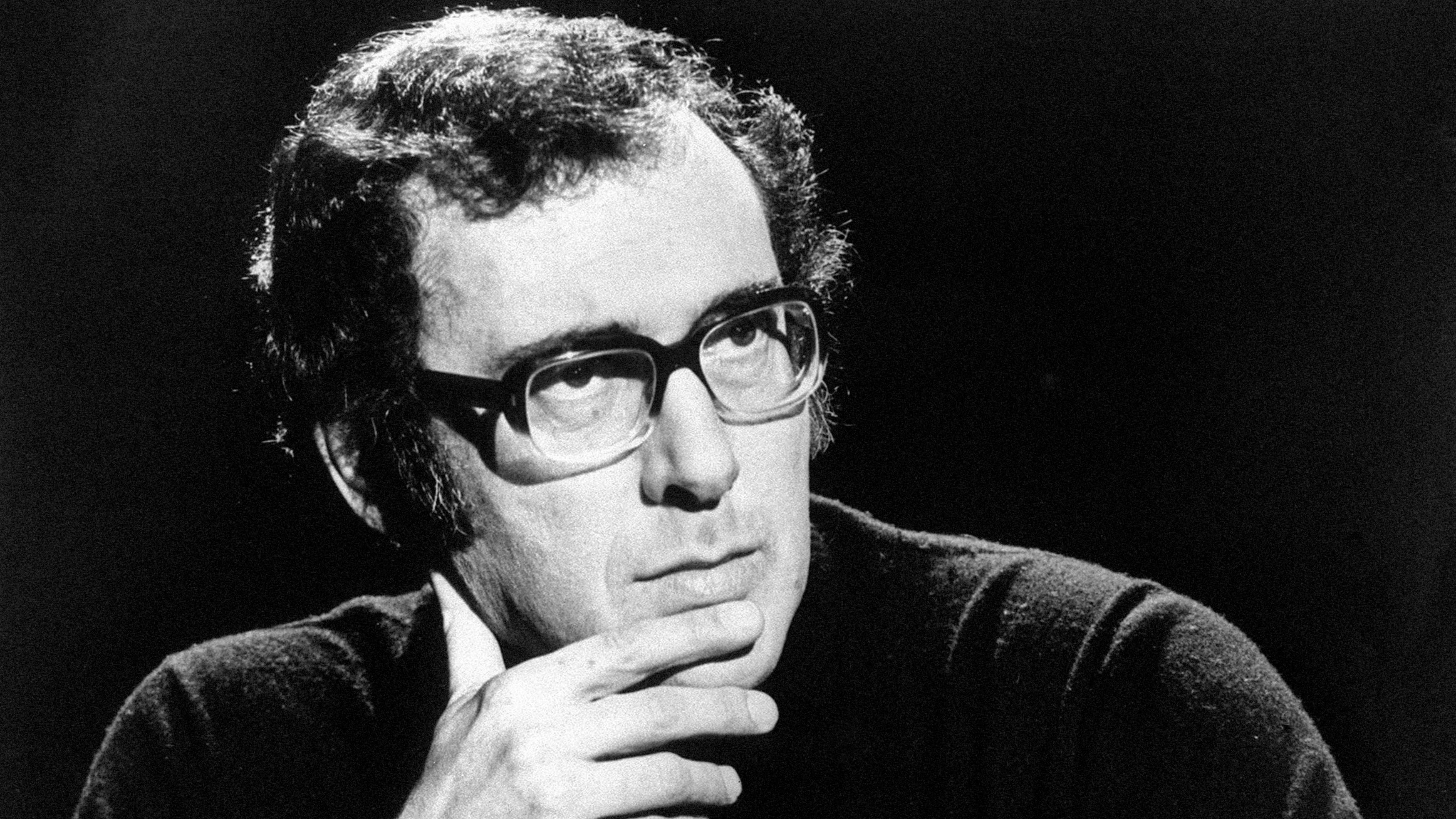
Born: October 10, 1930
Died: December 24, 2008
Harold Pinter was a British playwright, screenwriter, actor and director. His best known plays include The Birthday Party (1957), The Homecoming (1964) and Betrayal (1978). He adapted each of these plays for the screen. Other screenplay adaptations include The Servant (1963), The Go-Between (1971), The French Lieutenant's Woman (1981), The Trial (1993) and Sleuth (2007). He also directed or acted in radio, stage, television and film productions of his own.
His plays are noted for their use of understatement, small talk, reticence and even silence to convey the substance of a character's thought, which often lies several layers beneath, and contradicts, his speech. Pinter's plays are indecisive in their plots, presentation of characters, and endings, but they hold undeniable power and originality. They typically begin with a pair of characters whose stereotyped relations and role-playing are disrupted by the entrance of a stranger; the audience sees the psychic stability of the couple break down as their fears, jealousies, hatreds, sexual preoccupations, and loneliness emerge from beneath a screen of bizarre yet commonplace conversation. source
Unit 1 - Performance Workshop
It's not you, it's me by Don Zolidis
Script read & scene decisions
Scene 1
BERKOFF
Steven Berkoff is a British actor, playwright, author, practitioner and theatre director. In our previous lesson, quite a lot of us mentioned that we were interested in looking into practitioners like Berkoff or Artaud, where it is quite uncomfortable for the audience. We started looking at a couple of A level students performing East by Berkoff.
...
...
My first thoughts about Berkoff were that he made me feel uncomfortable but I was intrigued that that was his goal and he succeeded. I enjoyed it in a slightly cynical way, as I was uncomfortable but also wanted to know more and also try it out for myself. After reading through a bit of the script of East, we tried out a few sections. First, Amelie and I worked through the first scene together and came up with actions for every line or intention. We then moved on to a scene where Sylvie does a monologue and created our own scene with occasional choral speaking and actions.
...
...
I believe that we could have perfected it or made it more interesting if we had more time. I'm interested in continuing to look into Berkoff and Artaud and the art of cruelty theatre.
In this lesson, we had a group discussion about the text It's not you it's me by Don Zolidis. First of all we split into two and read through the script, one group reading scenes 1-6, the other group reading scenes 7-12. After that, in the two separate groups, we discussed which scenes we wanted to use for our performance. Once we had decided, we all came together and informed the other group about what happened in each scene and if we wanted it in the performance or not. Then we went through which extra characters could be in each scene and changed the order of some of the scenes to help it make more sense for what we want. I kept notes of what we were discussing:
Unit 1 - Performance Workshop
It's not you, it's me by Don Zolidis
Script read & scene decisions
Scene 1
yes
Split up into 2 groups
Scene 2
yes
Scene 3
no
Scene 4
yes - stage transition
Scene 5
yes
Scene 6
no
Scene 7
yes
Scene 8
yes
Scene 9
no
Scene 10
yes
Scene 11
yes
Scene 12
yes
Scene decisions, casting and justifications
Scene 1
opportunity for more characters - NFL boyfriend & server
sets the scene for the entire play
Jack references parts later on
Tristan = Jack
interested in the character development involved
Silvana = Ellie
likes that she's a playful character
server = Emma
NFL boyfriend = Hugo
Scene 2
has potential for being comedic
good paces throughout
James = Jacob
he has good ideas for the sudden switch at end
Amelie = Catherine
she thinks she can portray the subtext well
Scene 3
too childish
weird age range to portray
although has potential for more characters
Scene 4
a good transition scene
breaks up the long duologues
James in the last scene as Jacob could be the same person as John
Emma walks in when Amelie walks out so cheating could be the reason Mazie is upset
Emma = Mazie
good at over exaggeration
done the scene before so already have good ideas
James = John/Jacob
James is good at the dull but funny characterisation
Scene 5
funny, confusing scene whether it's a lie or not
making it a gay couple makes it a bit different
Hugo = Ashley
he likes the scene
has ideas for it
Louis = Todd
works best considering the circumstances
also has ideas and thoughts about characteristics
James = assassin
Scene 6
similar to other scene that we cut
doesn't fit within structure of other scenes too much
we collectively can't bring many ideas forward for it
Scene 7
have many ideas for people to involve in the scene
Louis = Mark
knows how to bring the comedy
knows how to deliver the lines
Silvana = Gabriella
feels connection with the character
likes playing this type of character
Tristan = dog person
Matt = new Gabriella
Scene 8
very short but very effective
Matt = Sam
put this scene in between scene 5 and scene 7
reacts to the name Gabriella after scene 7
Scene 9
not funny enough
don't feel as if we have as many ideas
although does have ability for more characters like Mad Dog
Scene 10
references in the last scene of this one
Amelie = Catherine
keeping same character throughout
Hugo = Luke
has many ideas for the scene
Louis = monk
knows how to use the comedic timing
Scene 11
like the lying scene
very funny and there are referenced in the last scene of this one
Emma = Jenny
will nicely bounce off with Tristan
Tristan = Jack
keeping same character throughout
Hugo = server
has ideas already
Scene 12
good way to end the play
references back to many memories
Tristan = Jack
Amelie = Catherine
Silvana = server
(scene 8) - between scene 5 & 7
Tristan also voice recorded some of our discussion which can be found in the teams folder.


